


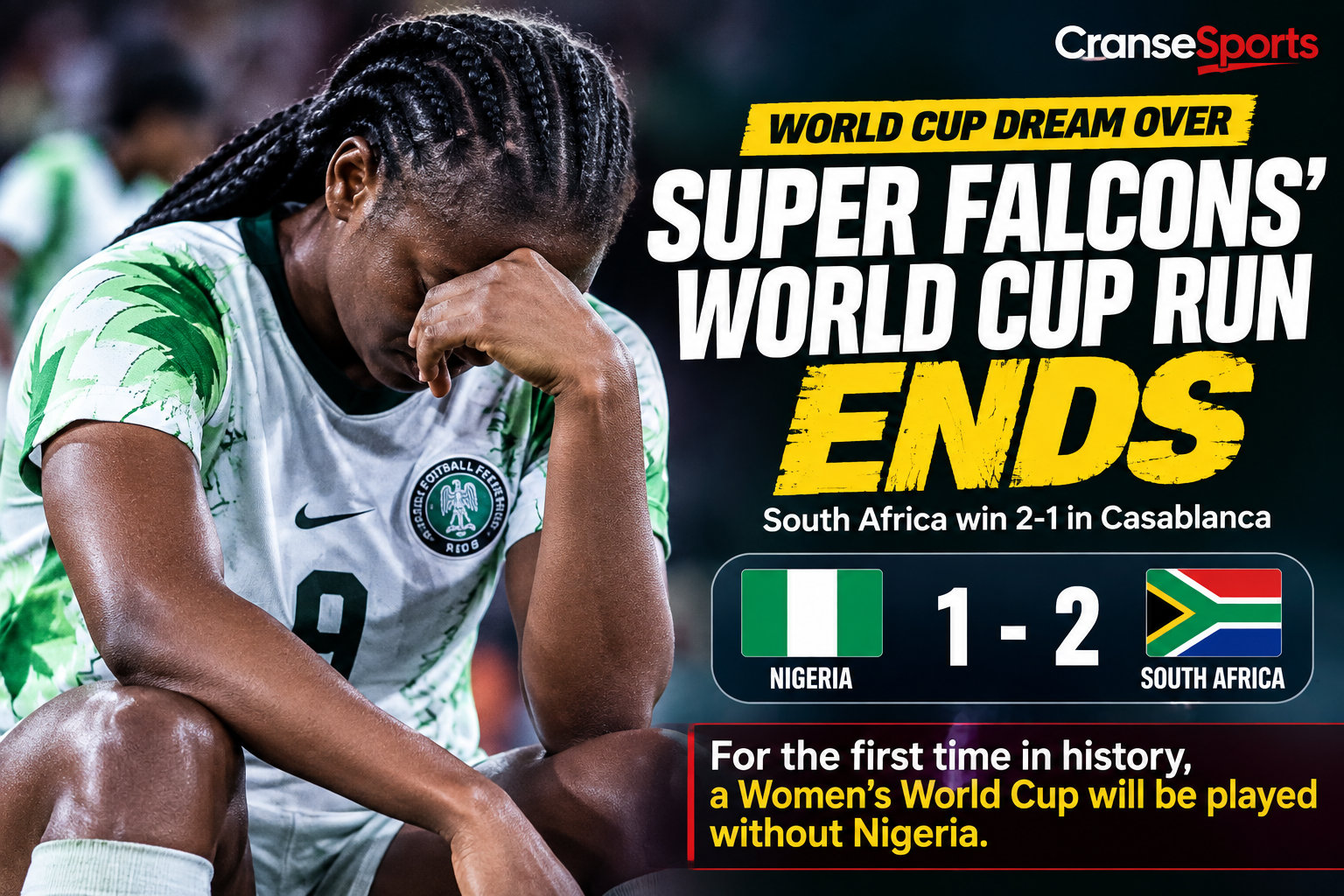
Super Falcons’ World Cup Streak Ends as South Africa Win 2-1 in Casablanca
Nigeria’s unbroken run at the FIFA Women’s World Cup is over.
South Africa defeated the Super Falcons 2-1 in Casablanca on Thursday, taking one of Africa’s remaining places in the FIFA Women’s World Cup 2027 Play-Off Tournament and shutting Nigeria out of the global finals for the first time in the competition’s history.
For a Nigerian team that had appeared at every Women’s World Cup since the inaugural tournament in 1991, this was more than another defeat.
It ended one of African football’s longest-standing guarantees.
The damage came in a punishing second half at the Moulay Rachid Stadium.
After a goalless opening 45 minutes, South Africa broke through in the 56th minute when Hildah Magaia helped launch a rapid counterattack and Thembi Kgatlana finished to put Banyana Banyana ahead.
Nigeria pushed for a response and came close through Uchenna Kanu, whose header was kept out by goalkeeper Kaylin Swart.
But the Super Falcons were hit again.

Captain Refiloe Jane struck from inside the area in the 77th minute, her effort taking a deflection off Christy Ucheibe before finding the net for 2-0.
Then came Nigeria’s final surge.
Deep into stoppage time, Jane was penalised for handball following a VAR review and received a second yellow card. Ucheibe converted the resulting penalty to cut the deficit to 2-1, with South Africa reduced to 10 players for the closing moments.
The equaliser never came.
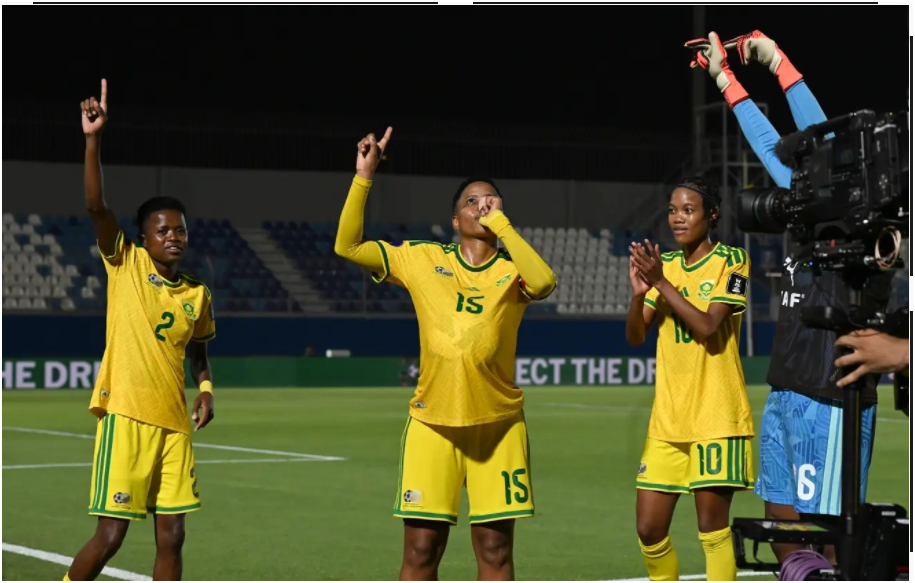
South Africa survived the late pressure and secured the result that kept their own hopes of reaching a third successive Women’s World Cup alive.
For Nigeria, there is no remaining route to Brazil 2027.
That reality carries enormous weight.
Before this campaign, the Super Falcons had been ever-present at the Women’s World Cup. Nigeria’s route to direct qualification had already disappeared with a 1-0 quarter-final defeat to Cameroon, leaving the playoff as one final escape route.
South Africa closed it.
The result now shifts the pressure away from qualification mathematics and onto the larger question confronting Nigerian women’s football.
How did Africa’s most decorated women’s national team reach the point where, for the first time, a World Cup will be played without them?
That question will not be answered by the pain of one night in Casablanca alone.
Brazil 2027 is gone.
What Nigeria does next will determine whether this becomes a historic interruption — or evidence that the balance of power in African women’s football has moved faster than the Super Falcons.
Cranse Sports
News For Fans Who Read The Game
