



One Route Left: Super Falcons Face South Africa With World Cup Dream Under Pressure
South Africa stand in the way in Casablanca on Thursday night, where two former African champions meet in a WAFCON play-off carrying a brutal consequence: the winner preserves a route towards the FIFA Women’s World Cup Brazil 2027, while the loser’s qualification campaign ends.
CAF’s official tournament structure confirms that the quarter-final losers remain in contention through play-off matches in Casablanca on 13 August. South Africa reached that route after losing 2-1 to Morocco, while Nigeria were beaten 1-0 by Cameroon.
For Nigeria, this is no consolation game.
The defending African champions arrived in Morocco chasing another continental crown and direct qualification for Brazil 2027. Cameroon ended that ambition in the quarter-finals, leaving Justin Madugu’s side with one remaining route through the play-off pathway.

South Africa are under the same pressure.
Banyana Banyana saw their automatic qualification chance disappear against hosts Morocco and now face a Nigerian side carrying its own frustration, expectation and urgency. SAFA’s current official board confirms Nigeria as South Africa’s play-off opponent on 13 August.
That turns this fixture into something sharper than a battle between familiar continental rivals.
It is a survival match.
Nigeria have already shown both sides of their tournament. They recovered from an opening defeat to Malawi, edged Zambia 1-0 and then overwhelmed Egypt 6-2 before Cameroon stopped them in the last eight. The Super Falcons have proved they can generate attacking pressure; what matters now is whether they can turn that pressure into the decisive goal when there is no second chance.
South Africa have reason to believe they can make the contest uncomfortable.
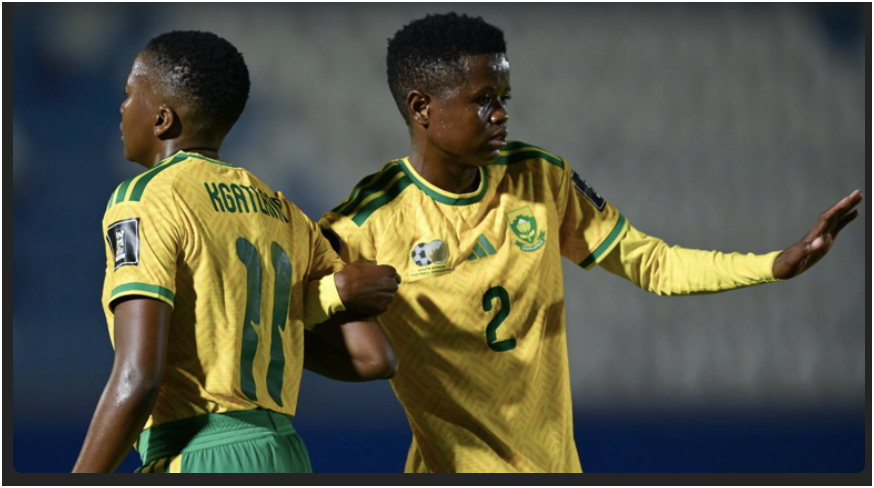
Banyana Banyana’s route through the tournament has been built around control, resilience and moments of attacking quality. Thembi Kgatlana remains the obvious danger if Nigeria push too many players forward and leave transition space behind them.
That tactical balance could shape the entire night.
Nigeria need enough tempo and width to prevent South Africa settling into a compact defensive rhythm. But reckless pressure could create precisely the spaces Kgatlana wants.
The first goal could become enormous.
If Nigeria score early, the Super Falcons can force South Africa to open the game. If Banyana Banyana strike first, Nigeria could find themselves chasing another knockout match against an opponent increasingly comfortable protecting space.
The pressure also falls heavily on Nigeria’s senior attacking figures.
Asisat Oshoala gives the Super Falcons a penalty-box reference point, while captain Rasheedat Ajibade remains one of Nigeria’s strongest carriers of attacking momentum. Their influence becomes even more important in a game where one clean chance may decide an entire qualification campaign.
For South Africa, Kgatlana offers the counter-threat that Nigeria cannot afford to ignore.
The larger consequence is clear.
Nigeria missed one of Africa’s direct qualification places when Cameroon knocked them out of the quarter-finals. South Africa suffered the same fate against Morocco. CAF’s competition format keeps both teams alive through this additional play-off route, but only one will leave Casablanca with that road still open.
That is why this match carries a different kind of pressure.
The trophy is already gone for both teams. What remains is the World Cup.
Nigeria have history, expectation and attacking pedigree. South Africa have tournament experience, defensive discipline and enough transition threat to punish mistakes.
There is no room left for either side to hide.
Nigeria versus South Africa is no longer a fight for the African crown. It is a fight for the right to keep chasing Brazil 2027.
