


By Sylvanus Ofekun
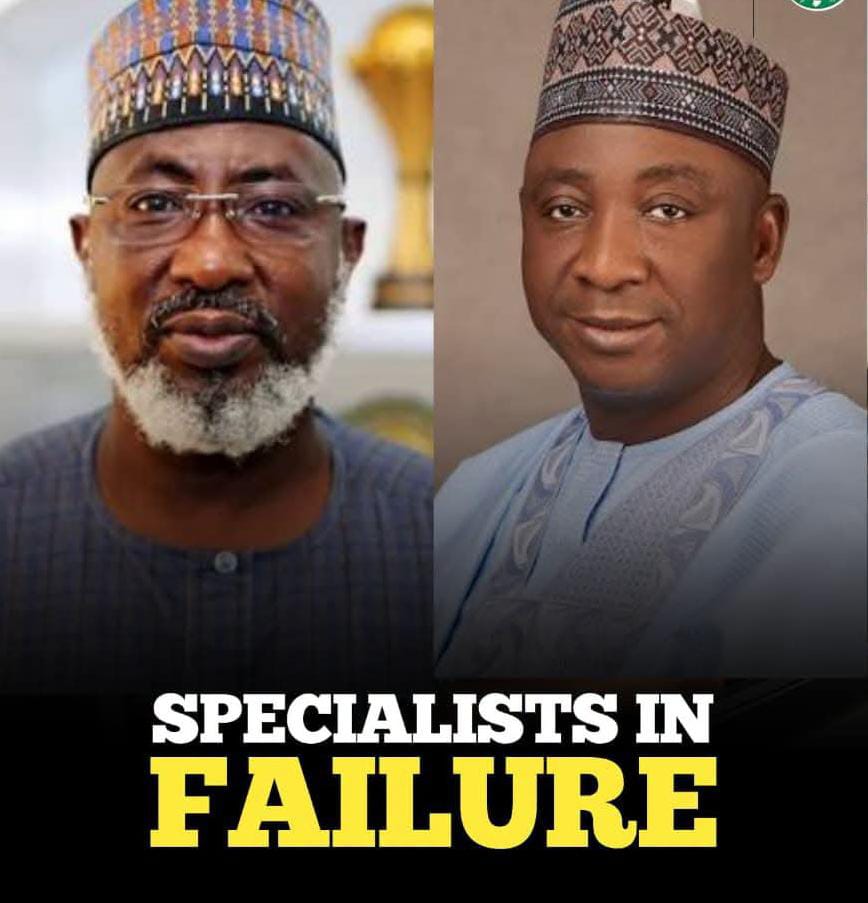
Nigerian football has officially hit rock bottom, from its historic heights of envy to a depth of despair, as the architects of this unprecedented disaster are sitting comfortably in the executive offices of the Nigeria Football Federation. Under the leadership of a man who accidentally and mysteriously entered the footballing system, I mean the President, Alhaji Ibrahim Musa Gusau and his executive committee, the nation is witnessing a nightmarish era characterized by gross incompetence, staggering insensitivity, and an absolute disregard for the collective intelligence of millions of passionate fans who have carried this game on their backs for decades with hope, money, time and emotion. This is no longer about a bad run of form or a temporary dip that every football nation experiences. This is about structural collapse, about a system deliberately run aground by the very people sworn to protect it, and the evidence is everywhere for anyone willing to open their eyes beyond the press statements and photo opportunities.
For the first time in the nation’s history, a catastrophic clean sweep of failure has occurred across the board, with the national teams failing to qualify for major tournaments at almost every level. The senior men, the senior women, the age-grade teams, even teams that used to be our guaranteed passage to the world stage have all been caught in this downward spiral. Yet despite failing in flying colours, despite the humiliation of watching other nations we once lorded over now take our places at global tournaments, the leadership’s response has not been one of accountability or resignation, but rather a chilling display of arrogance with a touch of swagger. There have been no press conferences to take responsibility, no roadmap presented to the public, no visible sackings or reforms. Instead we get platitudes, deflection, and the kind of body language that suggests they believe Nigerians have short memories and will soon be distracted by the next domestic league fixture or the next foreign-based player announcement.
Nowhere is the NFF’s toxic incompetence more glaring than in their systemic destruction of the Super Falcons. For the first time since the inception of the FIFA Women’s World Cup in 1991, Nigeria will not be participating. Let that sink in. The most successful women’s team on the African continent, a team that carried the flag of Africa to the second round multiple times, a team that made young girls in villages believe that football was for them too, has been locked out of the world stage not by superior opponents alone, but by administrative sabotage. This was not a stroke of bad luck; it was a carefully orchestrated downfall premidated by the NFF leadership inaction and gross incompetence. The Federation deliberately starved the team of quality preparation, refusing to organize grade-A friendly matches against top opposition that would have sharpened them for the rigors of qualification. Camps were poorly planned, allowances were delayed, and communication broke down at the exact moments when leadership was needed most. Then, in a move that borders on deliberate sabotage, they handed the reins of Africa’s most successful team to a notorious “relegation specialist”—a coach whose only pedigree was plunging club sides into the lower divisions notably Adamawa United, Taraba United and Makwada Numa FC. To appoint such a profile to manage a team of Falcons who had competed in every World Cup was either profound naivety or calculated destruction. The NFF essentially fast-tracked the downfall of a global powerhouse and then acted surprised when the results followed the logic of their decisions.
The abuse did not stop on the pitch. In a shameful, unprecedented milestone for Nigerian sports, the Super Falcons were forced to sue the NFF at the Court of Arbitration for Sport. The reason? The players were fighting for their rightful bonuses, funds that had already been approved and released by the Federal Government, yet mysteriously failed to reach the hands of the athletes who shed blood, sweat, and tears for the nation. Imagine women who had given their prime years to the green and white jersey having to seek legal redress abroad just to be paid what was already theirs. It is a damning indictment of an executive committee that seems to care only about lining its own pockets rather than the welfare of her players, and it sends a terrible message to every young girl dreaming of wearing the national colors that excellence will be rewarded with exploitation
One would expect a total crisis lockdown at the Glass House. One would expect emergency meetings, audits, and a leadership in sackcloth and ashes begging for forgiveness and a second chance. Instead, while the entire architecture of Nigerian international football collapsed in ruins around them, Alhaji Ibrahim Musa Gusau and members of his executive committee found the peace of mind to attend the local “Ahlan Gusau” preseason tournament. The sheer optics of the NFF President leisurely attending a local grassroots tournament named in his honour while every single national team burns to the ground on the global stage is a slap in the face to over 200 million Nigerians. It is an unapologetic display of tone-deafness and a massive insult to the nation’s sporting pride. It tells the market woman in Kano who saves to watch matches, the student in Enugu who skips lectures to support the Eagles, and the diaspora fan in London who wakes at 2am to stream games, that their pain does not register, that the federation is now a private club for self-congratulation.
The damage goes beyond results. Sponsors are running away because they cannot associate with failure and scandal. Youth development has stalled because there is no clear pathway from the grassroots to the national teams, only politics and godfatherism. Former players who should be mentoring the next generation are alienated, while agents and middlemen thrive in the vacuum. The technical department is hollowed out, scouting is almost non-existent, and data-driven planning has been replaced by sentiment and patronage. We have turned a proud footballing nation into a global laughingstock, treating the Federation as a personal enterprise rather than a public trust, and the cost is being paid in lost opportunities, lost pride, and lost generations of talent that will never get the platform they deserve.
The lack of shame emanating from the NFF hierarchy is nothing short of terrifying because it has become normalized. Failure is no longer an emergency, it is the baseline. And in that environment, mediocrity thrives. The patience of the Nigerian football fan has been completely exhausted. The era of accepting bare-minimum effort, financial opacity, and executive impunity is over. We have clapped long enough for press releases. We have donated enough goodwill. For Gusau and his executive committee, the message from the streets, the stadiums, the viewing centers, and the stakeholders is deafeningly clear: it can no longer be business as usual. Nigerian football belongs to Nigerians, to the taxi driver arguing tactics in traffic, to the coach training kids with no boots, to the mother who named her daughter after a Falcon. It does not belong to a cabal that mistakes a title for a crown. The current leadership has thoroughly disqualified itself from holding that sacred trust, and the time for cosmetic changes has passed. What is required now is a complete reset, driven by transparency, competence, and a reverence for the game that built so many dreams.
