


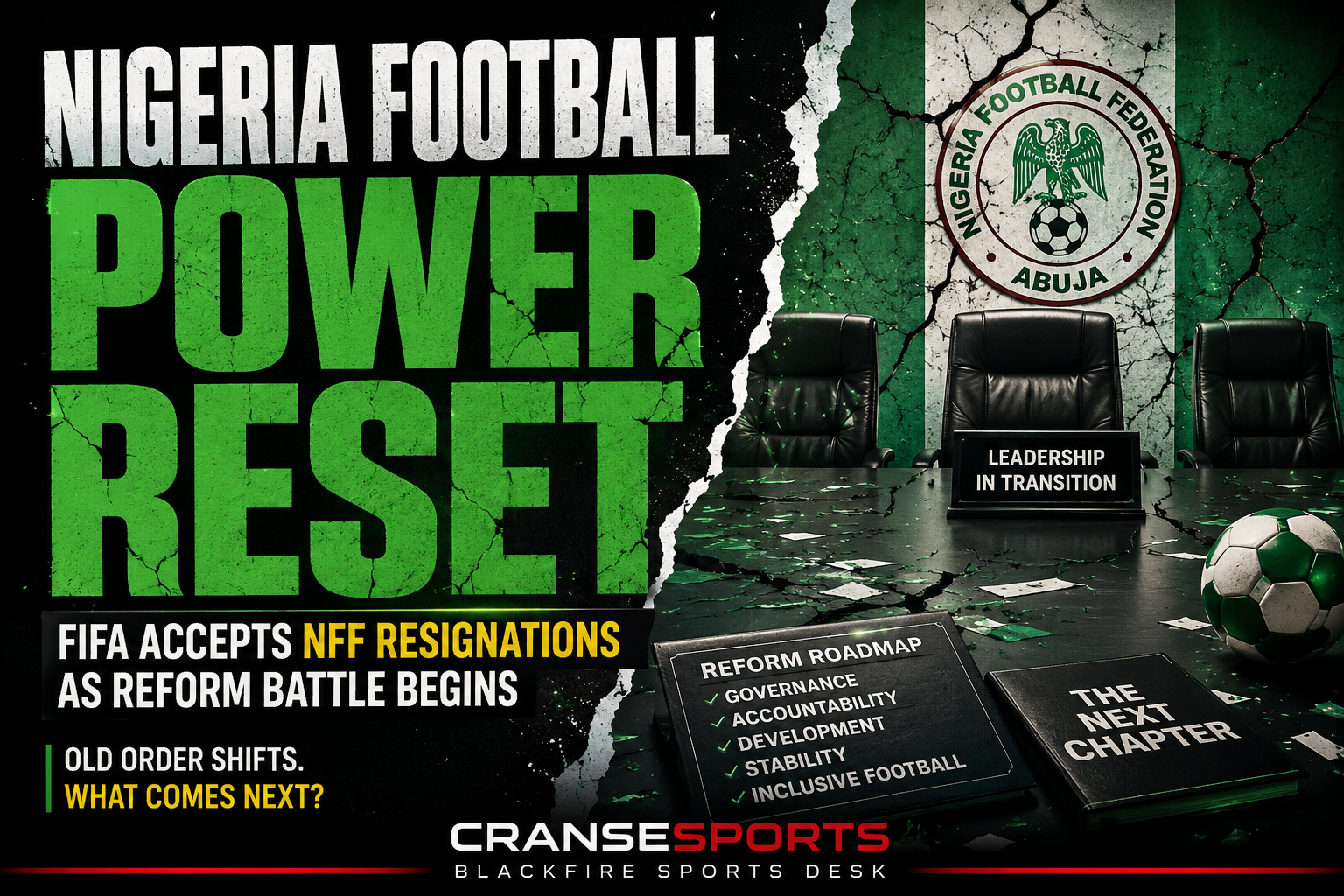
Nigeria football has entered one of its biggest power resets in years.
FIFA has accepted the resignations of principal officers of the Nigeria Football Federation as talks continue over a comprehensive reform programme designed to reshape the administration of the game in the country.
The NFF confirmed on September 1 that representatives of FIFA, CAF, the National Sports Commission and the federation met at FIFA House in Zurich to continue discussions over a new roadmap covering short-, medium- and long-term reforms.
Football beyond a simple change of personnel
The battle now is over structure.
Former NFF president Ibrahim Musa Gusau, general secretary Mohammed Sanusi and members of the federation’s Executive Committee resigned on August 27 following mounting criticism over the performances of Nigeria’s national teams.

The NFF said Gusau stepped down 34 days before the end of his four-year term.
The pressure had been building.
Nigeria failed to qualify for the 2026 FIFA World Cup, while the Super Falcons also missed out on the 2027 Women’s World Cup; the first time the women’s national team had failed to reach the global tournament since its creation.
Those failures intensified public demands for accountability inside the federation.
The resignations are only the opening move.
President Bola Tinubu has directed a comprehensive reform of Nigerian football, with governance, administration, stakeholder representation, development pathways, domestic competitions and accountability among the areas under examination.
That instruction has already changed the federation’s immediate political timetable.
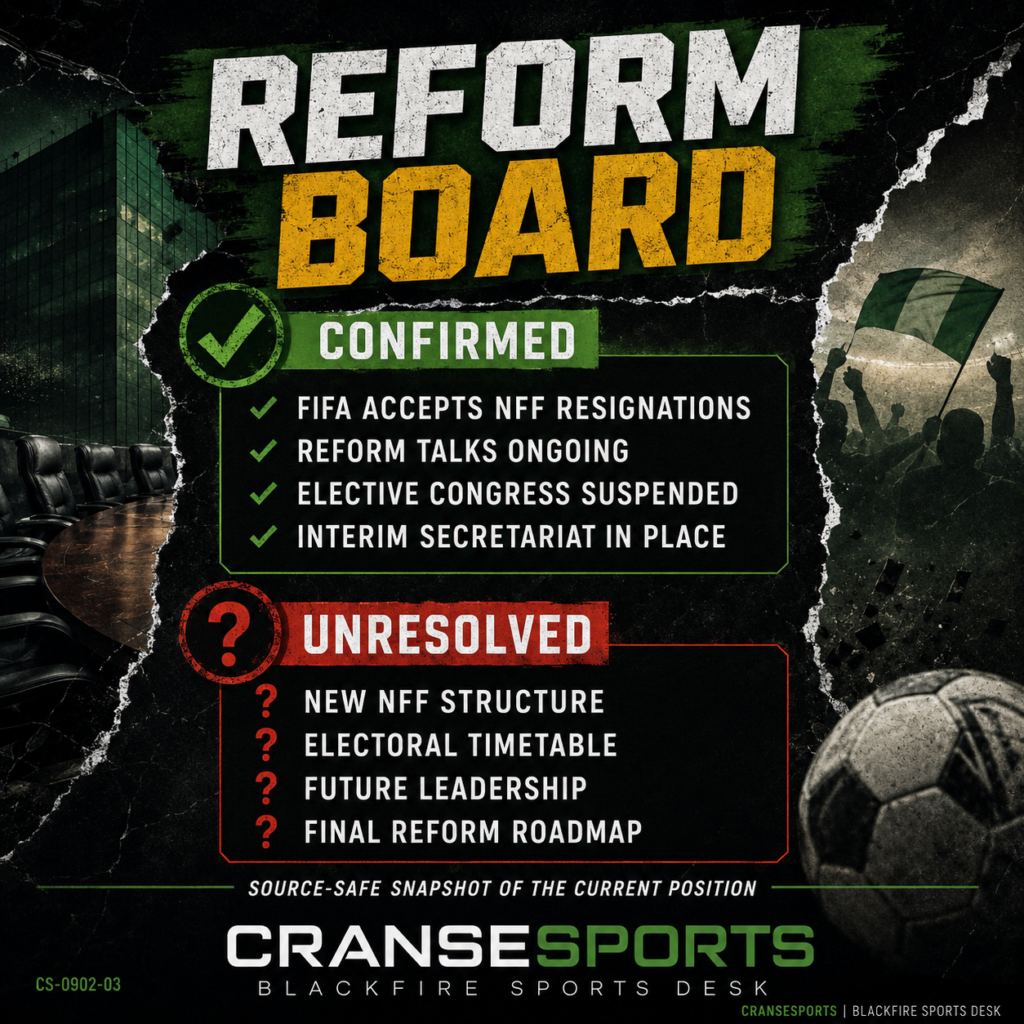
The NFF confirmed that the elective congress previously scheduled for September 27 has been suspended, while acting general secretary Emmanuel Ikpeme has been placed in charge of the federation secretariat during the transition.
A fresh electoral process is expected only after the reform programme has been developed in consultation with FIFA and CAF.
The Real Pressure
For years, arguments around Nigerian football have often centred on coaches, player selection, match results and tournament qualification.
The current process reaches deeper into the machinery that decides how the sport is governed, who controls its institutions and what accountability should look like when performance collapses.
National Sports Commission chairman Shehu Dikko led Nigeria’s delegation at the Zurich talks. The NFF said the discussions also involved CAF representatives and FIFA officials responsible for member-association affairs in Africa.
The declared aim is an inclusive new NFF operating in a more stable environment.
What that institution will look like, who will eventually contest control of it and how much of the existing football structure survives the reform process have not yet been settled publicly.
The next phase will determine whether the current disruption becomes another administrative reshuffle or the beginning of a deeper break with structures that have repeatedly attracted criticism whenever Nigerian football falls short.
Prolonged institutional paralysis
The reform process also arrives at a moment when the country cannot afford prolonged institutional paralysis.
National teams still require planning. Domestic competitions need administration. Youth development pathways, coaching structures, refereeing, commercial relationships and international obligations cannot simply stop while the political fight over the federation continues.
That makes continuity and reform twin pressures.
Nigeria must rebuild its football administration without losing control of the football itself.
FIFA’s acceptance of the resignations confirms that the leadership transition is under way, but the shape of the next NFF including its governance structure, electoral timetable and eventual office-holders remains unsettled.
The harder question now begins:
What replaces the current structure and will the reform process deliver the accountability and results Nigerian football has spent years demanding?
Cranse Sports
News For Fans Who Read The Game
