



Europe’s club season has moved past qualification. Now the real pressure starts.
UEFA has confirmed that 108 clubs from 39 national associations will compete across the 2026/27 Champions League, Europa League and Conference League league phases, completing the field for another season under the expanded league-phase system.
This is the third campaign using the format introduced in 2024/25, and its scale is now impossible to ignore.
Across the three competitions, more clubs, more associations and more routes into meaningful European football are feeding into a calendar that will stretch from September deep into the new year.
The Champions League remains the centrepiece.
Thirty-six clubs will contest its league phase, with Matchday 1 scheduled for September 8–10.
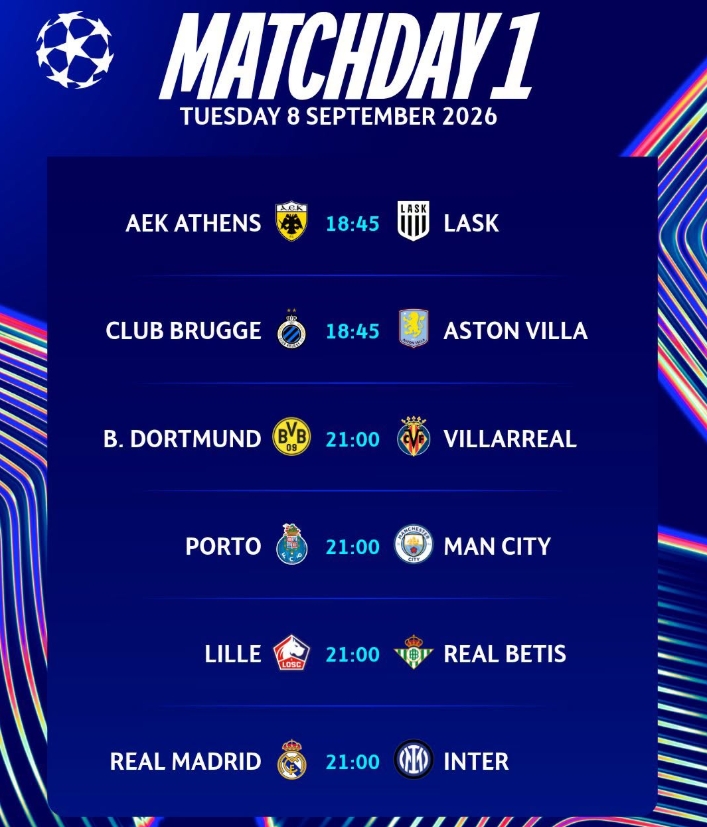
The field includes familiar heavyweights such as Real Madrid, Barcelona, Bayern Munich, Liverpool, Manchester City, Paris Saint-Germain and Inter, but it also carries a fresh layer of disruption from clubs that had to survive qualification before reaching the main stage.
Sabah, Bodø/Glimt and LASK secured their places on Tuesday, before Fenerbahçe, Viking, AEK Athens and Slovan Bratislava completed the Champions League league-phase line-up the following night.
That mix is part of what makes the league phase increasingly difficult to read.
The old group-stage rhythm has gone. Every club now enters a broader standings race, where individual fixtures carry consequences across the entire table rather than inside a four-team group.
For the Champions League alone, the league phase contains 36 teams and 144 matches across eight matchdays.
That creates a different kind of pressure.
A bad night is no longer isolated to one group. A dropped result can shift a club’s position against dozens of rivals competing in the same overall table.
The competition calendar reflects that grind.
The Champions League league phase begins in September and runs through January, meaning contenders must carry European intensity across five months while simultaneously managing domestic demands.
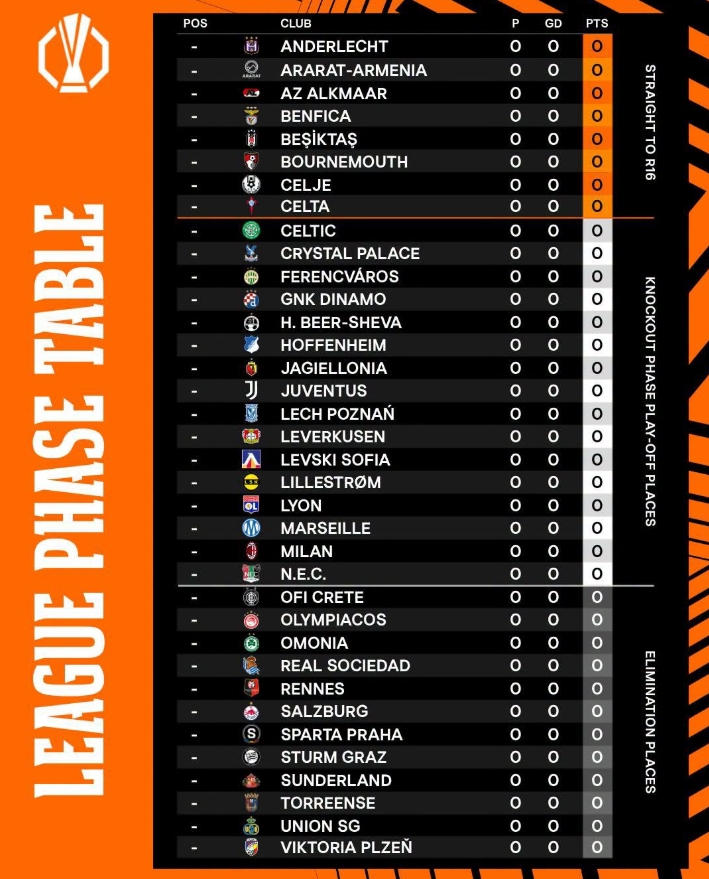
UEFA’s wider numbers also show how much the continental map has expanded.
The 108 clubs across all three league phases represent 39 associations, with the Conference League continuing to provide some of the clearest evidence of that broader reach.
UEFA says the 2026/27 Conference League will feature clubs from a record 30 national associations.
Inter Club d’Escaldes have also become the first Andorran club to reach a UEFA men’s group stage or league phase, while clubs including Aarhus, Egnatia, Iberia Tbilisi, Kauno Žalgiris, Mjällby, Riga FC and Sint-Truidense will make their first appearances at this stage.
For some clubs, Europe is still about lifting trophies.
For others, simply reaching the league phase changes the scale of their season.
That tension between giants protecting status and emerging clubs fighting for territory is now built directly into UEFA’s competition architecture.
And with the fields complete, qualification stories are over.
The next argument is no longer about who gets in.
It is about who can survive once the table starts moving.
Cranse Sports
News For Fans Who Read The Game
